02 一 RIMPA LEGACY
THE BIRTH OF A LIVING ART
生きた芸術のはじまり
FROM KYOTO TO THE WORLD — AND INTO THE 21ST CENTURY
京都から世界へ、そして21世紀へ
16 century
BEFORE RIMPA
HASEGAWA TŌHAKU 1539–1610
Hasegawa Tōhaku is not conventionally classified by art history as a founder of RIMPA.
Yet RIMPA21 MUSEUM sees in his work an earlier manifestation of an aesthetic sensibility that would later resonate through RIMPA.
Monumental forms of nature unfolding across fields of gold.
A powerful use of space in which fullness and emptiness coexist.
Trees and plants transformed from observed nature into rhythm, presence, and life.
And above all, an understanding of painting not as an isolated image, but as an art capable of transforming the architectural space around it.
In works such as Maple Tree and Pine Tree and Autumn Plants, we encounter qualities that would later find new expression in Sōtatsu, Kōrin, Hōitsu, and beyond.
This museum does not present Tōhaku as a historical member of RIMPA.
It presents him as BEFORE RIMPA —
a precursor in whom RIMPA21 recognizes the emergence of an aesthetic yet to be named.
長谷川等伯は、美術史上、琳派の創始者として位置づけられている画家ではありません。しかしRIMPA21 MUSEUMは、琳派が17世紀に光悦と宗達によって姿を現す以前に、すでに等伯の作品の中に、後の琳派へと響いてゆく美意識の萌芽を見出します。
金地に広がる大胆な自然の造形。
巨大な画面を満たしながら、なお余白を生かす空間感覚。
樹木や草花を単なる自然描写ではなく、リズムと生命をもつ存在として構成する感性。そして、絵画を独立した一枚の「絵」としてではなく、建築空間そのものを変容させる芸術として捉える眼差し。《楓図壁貼付》や《松に秋草図屏風》には、後に宗達、光琳、抱一へと受け継がれてゆく琳派の美と共鳴するものがあります。
ここで等伯を「琳派」と呼ぶのではありません。
RIMPA21 MUSEUMは彼を、BEFORE RIMPA——琳派という名が生まれる以前に、その美学を予感させる存在として位置づけます。

HASEGAWA TOHAKU Maple plants 長谷川等伯《楓図》
c. 1593, ink, color and gold on paper, 174x139 cm. Chishaku-ji, Kyoto


HASEGAWA TOHAKU Pine Trees 長谷川等伯《松林図屏風》
Late 16th century, Azuchi–Momoyama period. Ink on paper, pair of six-panel folding screens. Each screen: 156.8 × 356.0 cm.
National Treasure, Tokyo National Museum.
安土桃山時代、16世紀末。紙本墨画、六曲一双。各隻 156.8 × 356.0 cm。国宝、東京国立博物館蔵
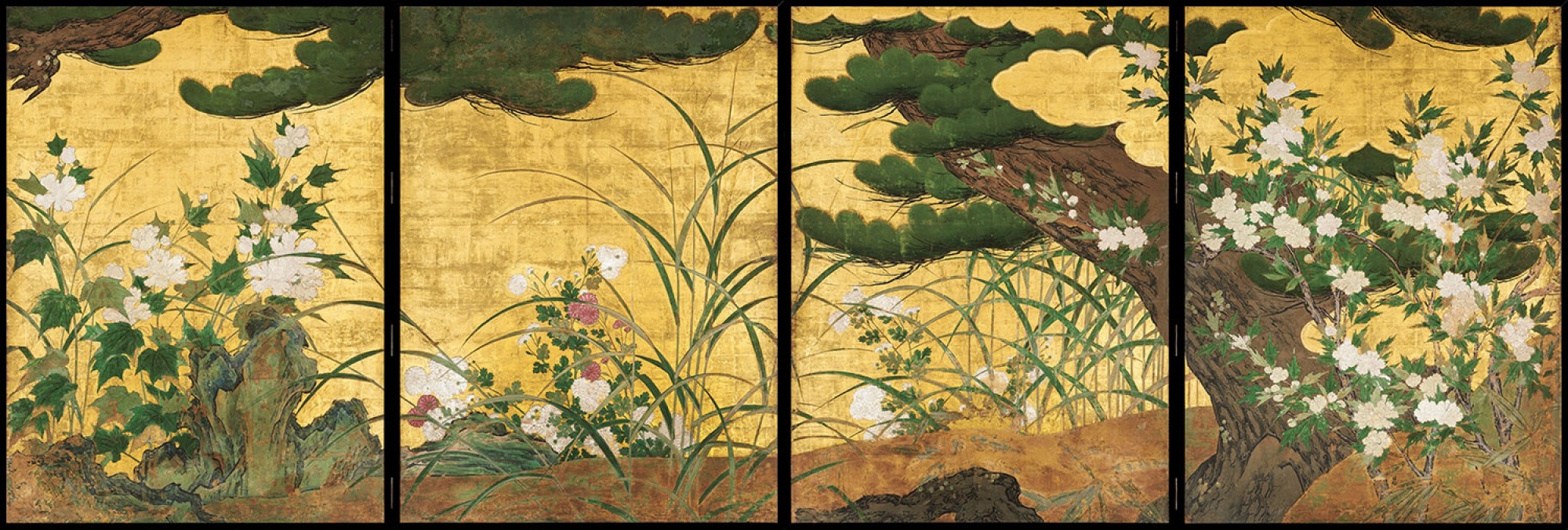
HASEGAWA TOHAKU Pine Tree and Autumn Grasses
長谷川等伯《松林図屏風》
c. 1592, Momoyama period. Ink and color on gold-leaf paper, pair of two-panel folding screens. Approx. 227.3 × 331 cm.
National Treasure, Chishaku-in, Kyoto
1592年頃、桃山時代。紙本金地着色、二曲一双。約227.3 × 331 cm。国宝、京都・智積院蔵土桃山時代、16世紀末。紙本墨画、六曲一双。各隻 156.8 × 356.0 cm。
国宝、東京国立博物館蔵
17 century

Tawaraya Sōtatsu & Hon’ami Kōetsu, Cranes and Poems of the Thirty-Six Immortal Poets
17th century. Gold and silver on paper, ink. 34.0 × 1356.0 cm. Kyoto National Museum.
俵屋宗達 画・本阿弥光悦 書《鶴下絵三十六歌仙和歌巻》
17世紀。紙本、金銀泥・墨。34.0 × 1356.0 cm。京都国立博物館蔵。

Tawaraya Sōtatsu, Wind God and Thunder God Screens
17th century. Ink and color on gold-leaf paper, pair of two-panel folding screens.
Each 154.5 × 169.8 cm. National Treasure, Kennin-ji, Kyoto.
俵屋宗達《風神雷神図屏風》
17世紀。紙本金地著色、二曲一双。各154.5 × 169.8 cm。国宝、京都・建仁寺蔵。

Tawaraya Sōtatsu, Waves at Matsushima
17th century. Ink, color, gold, and silver on paper, pair of six-panel folding screens. Each 166 × 369.9 cm.
National Museum of Asian Art, Smithsonian Institution, Washington, D.C.
俵俵屋宗達《松島図屏風》
17世紀。紙本、墨・彩色・金銀、六曲一双。各166 × 369.9 cm。
National Museum of Asian Art, Smithsonian Institution, Washington, D.C. 蔵
18 century
OGATA KÔRIN (1658–1716)

Ogata Kōrin, Red and White Plum Blossoms
18th century, Edo period. Color and gold leaf on paper, pair of two-panel folding screens. Each 156.0 × 172.2 cm.
National Treasure, MOA Museum of Art.
尾形光琳《紅白梅図屏風》
18世紀、江戸時代。紙本金地著色、二曲一双。各156.0 × 172.2 cm。国宝、MOA美術館蔵

Ogata Kōrin, Red and White Plum Blossoms
18th century, Edo period. Color and gold leaf on paper, pair of two-panel folding screens. Each 156.0 × 172.2 cm.
National Treasure, MOA Museum of Art.
尾形光琳《波濤図屏風》
1704–1709年頃、江戸時代。紙本金地着色、二曲屏風。146.5 × 165.4 cm。
The Metropolitan Museum of Art, New York 蔵

Ogata Kōrin, Irises at Yatsuhashi (Eight Bridges)
After 1709, Edo period. Ink and color on gold leaf on paper, pair of six-panel folding screens. Each 163.7 × 352.4 cm.
The Metropolitan Museum of Art, New York.
尾形光琳《八橋図屏風》
1709年以後、江戸時代。紙本金地着色、六曲一双。各163.7 × 352.4 cm。
The Metropolitan Museum of Art, New York 蔵

OOgata Kōrin, Irises
18th century, Edo period. Ink and color on gold-foiled paper, pair of six-panel folding screens.
Each 151.2 × 358.8 cm. National Treasure, Nezu Museum, Tokyo.
尾形光琳《燕子花図屏風》
18世紀、江戸時代。紙本金地着色、六曲一双。各151.2 × 358.8 cm。国宝、根津美術館蔵
19century
KATSUSHIKA HOKUSAI 1760–1849
葛飾北斎
Katsushika Hokusai and RIMPA
In the mid-1790s, Hokusai is said to have studied the decorative art of the RIMPA school, and from 1795 he used the art name Sōri. The British Museum also records Tawaraya Sōri among the artist names associated with Hokusai.
RIMPA21 MUSEUM presents this historical connection as an important link between Hokusai and RIMPA.
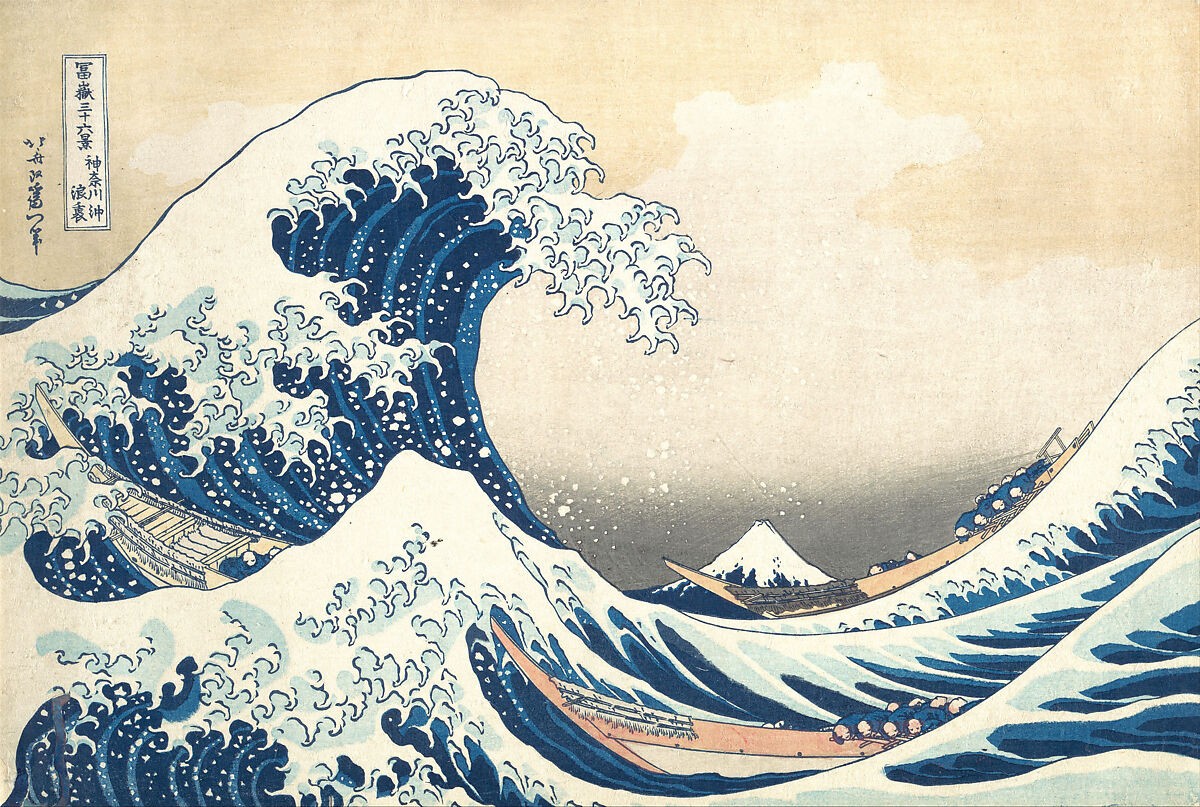
KATSUSHIKA HOKUSAI
葛飾北斎 1760–1849
Under the Wave off Kanagawa (The Great Wave)
c. 1830–32, Edo period. Polychrome woodblock print; ink and color on paper. 25.7 × 37.9 cm.
The Metropolitan Museum of Art, New York.
葛飾北斎《冨嶽三十六景 神奈川沖浪裏》
1830–32年頃、江戸時代。多色木版、紙。25.7 × 37.9 cm。The Metropolitan Museum of Art, New York 蔵
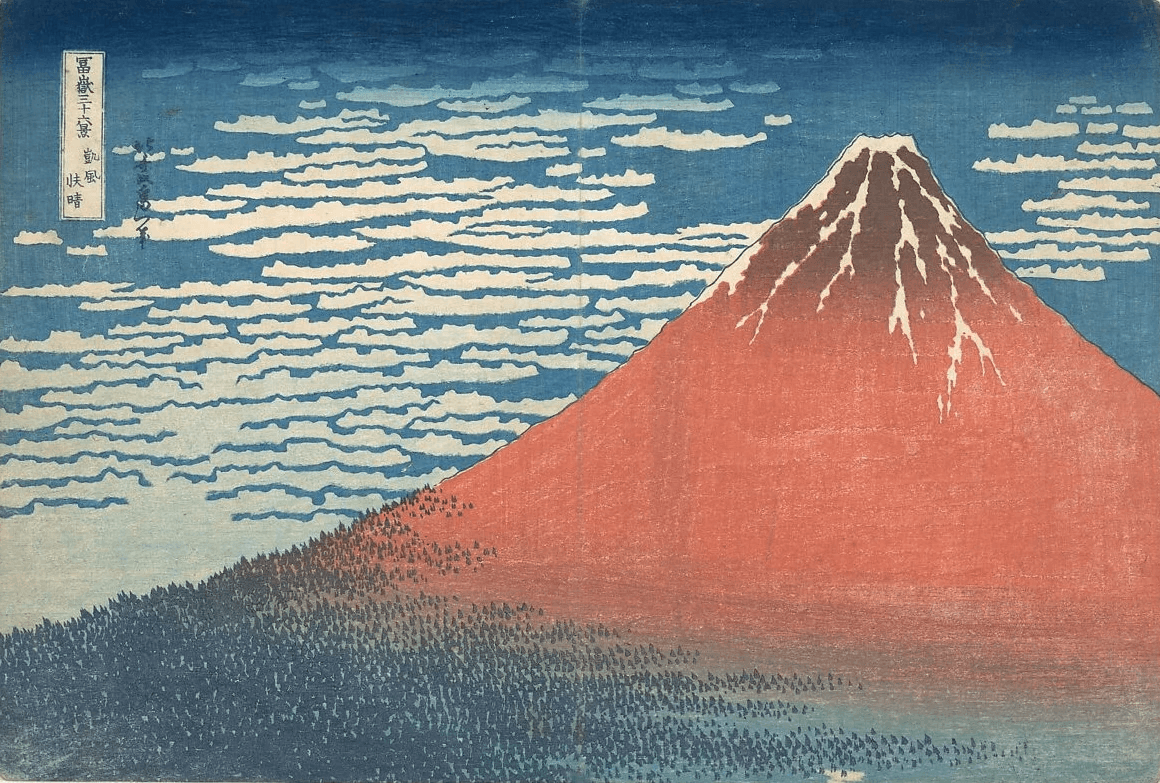
Katsushika Hokusai, South Wind, Clear Sky (Red Fuji)
c. 1830–32, Edo period. Polychrome woodblock print; ink and color on paper. 25.4 × 37.8 cm. The Metropolitan Museum of Art, New York.
葛飾北斎《冨嶽三十六景 凱風快晴》
1830–32年頃、江戸時代。多色木版、紙。25.4 × 37.8 cm。The Metropolitan Museum of Art, New York 蔵
SAKAI HŌITSU 1761–1828
酒井抱一
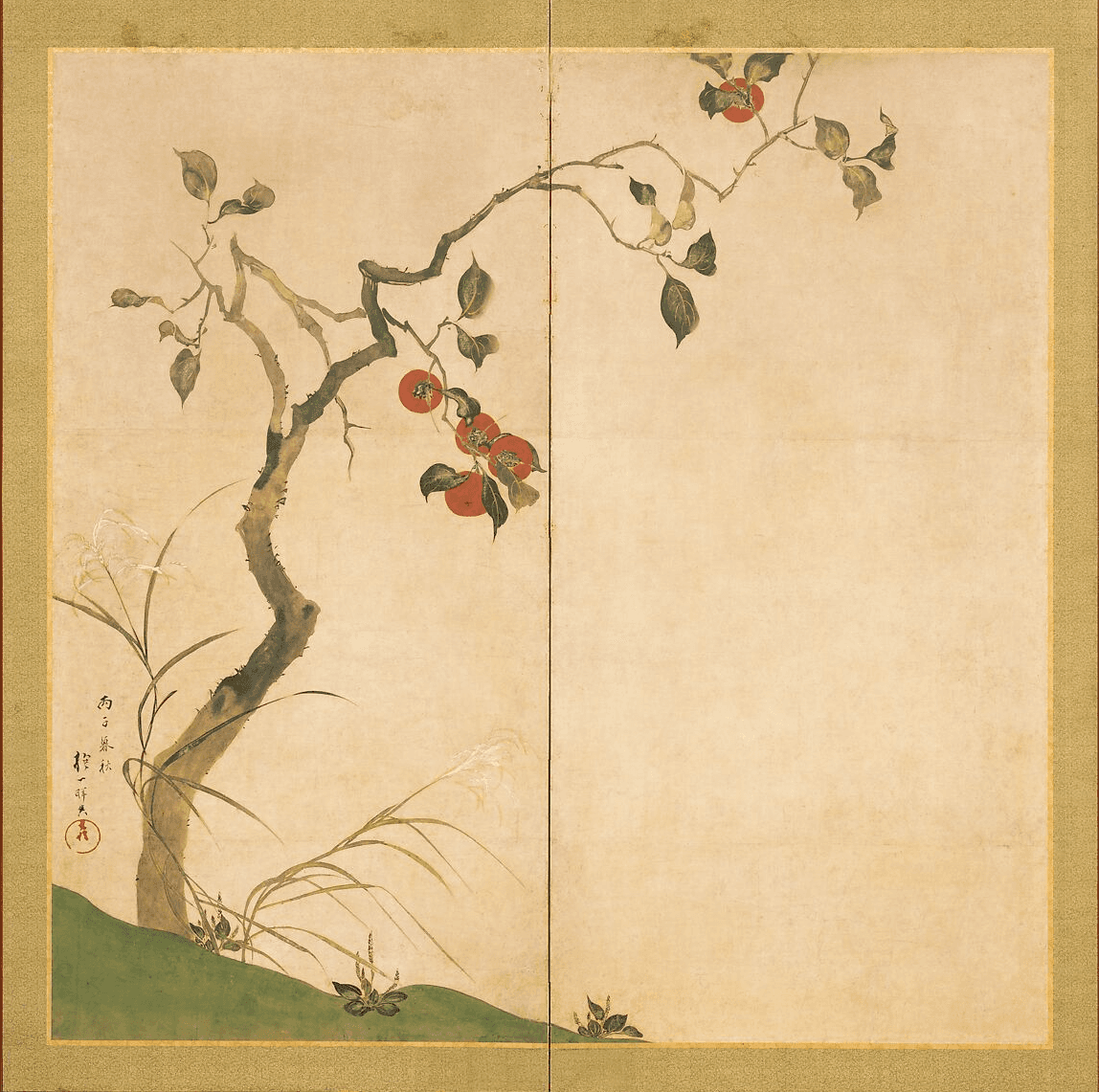
Sakai Hōitsu, Persimmon Tree
1816, Edo period. Ink and color on paper, two-panel folding screen. 143.7 × 143.8 cm.
The Metropolitan Museum of Art, New York.
酒井抱一《柿図屏風》
1816年、江戸時代。紙本墨画淡彩、二曲屏風。143.7 × 143.8 cm。
The Metropolitan Museum of Art, New York 蔵。
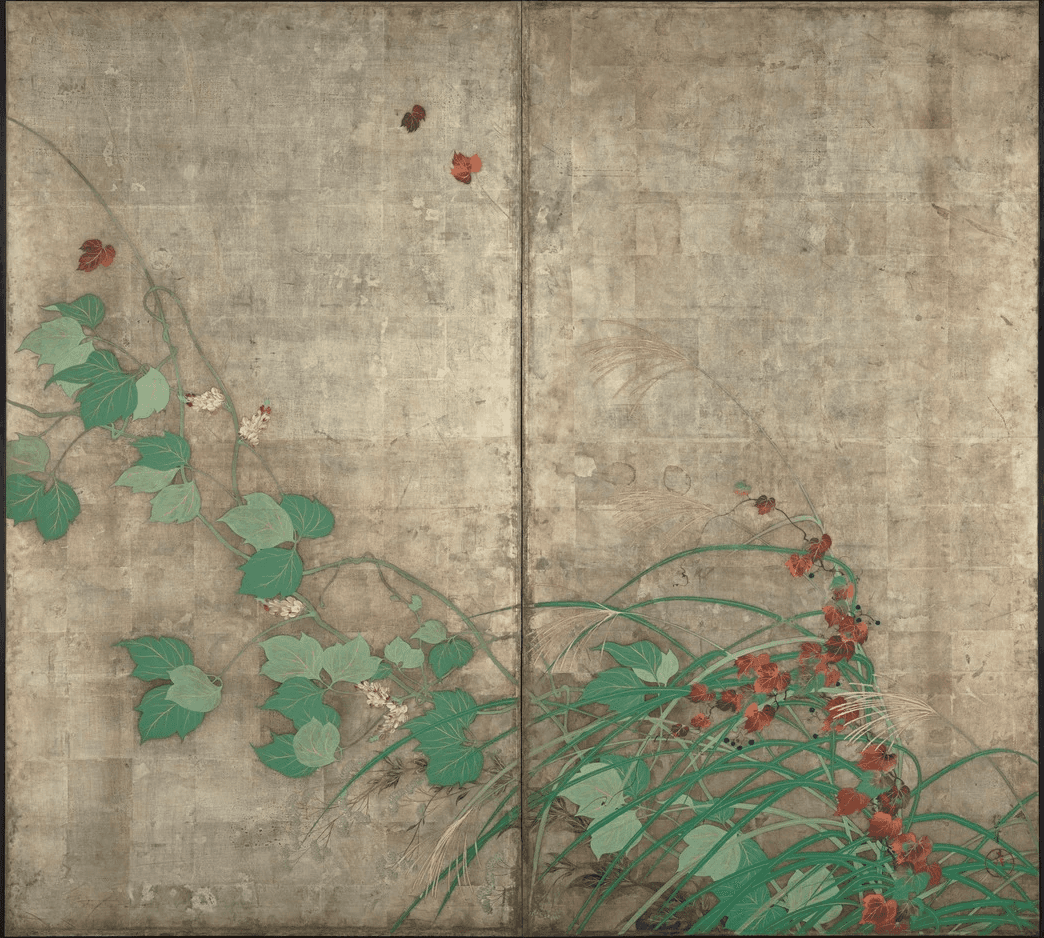
Sakai Hōitsu, Summer and Autumn Grasses
c. 1821, Edo period. Ink and color on silver-leaf paper, pair of two-panel folding screens. Each 164.5 × 181.8 cm.
Important Cultural Property, Tokyo National Museum.
酒井抱一《夏秋草図屏風》
1821年頃、江戸時代。紙本銀地着色、二曲一双。各164.5 × 181.8 cm。重要文化財、東京国立博物館蔵。
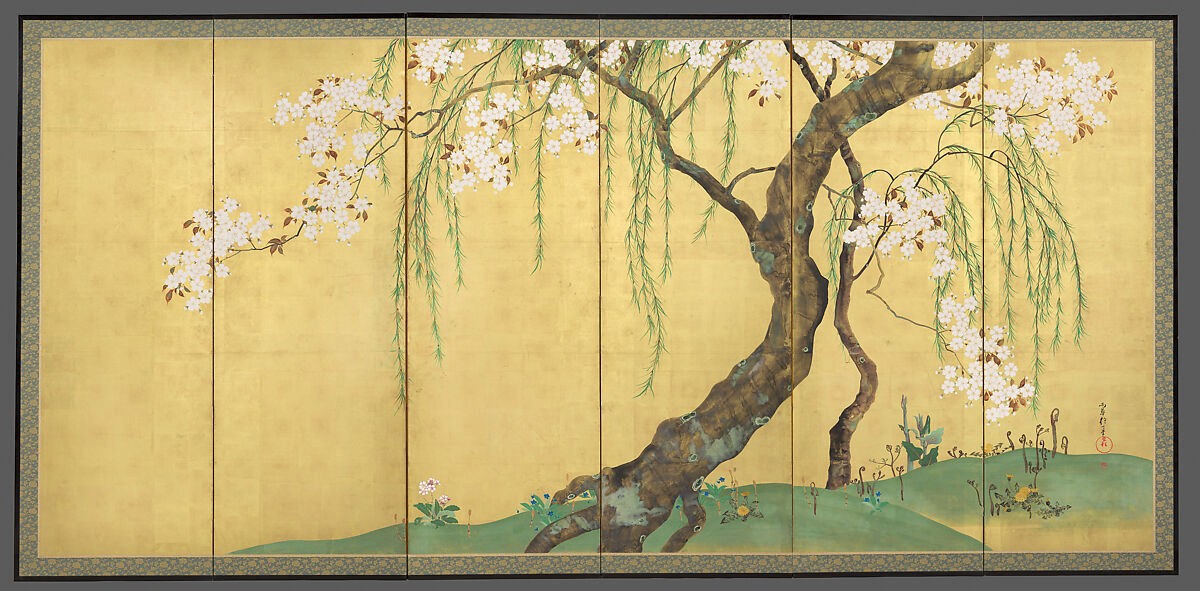
Sakai Hōitsu, Summer and Autumn Grasses
c. 1821, Edo period. Ink and color on silver-leaf paper, pair of two-panel folding screens. Each 164.5 × 181.8 cm.
Important Cultural Property, Tokyo National Museum.
酒井抱一《夏秋草図屏風》
1821年頃、江戸時代。紙本銀地着色、二曲一双。各164.5 × 181.8 cm。重要文化財、東京国立博物館蔵。
SUZUKI KIITSU 1796–1858
鈴木其一
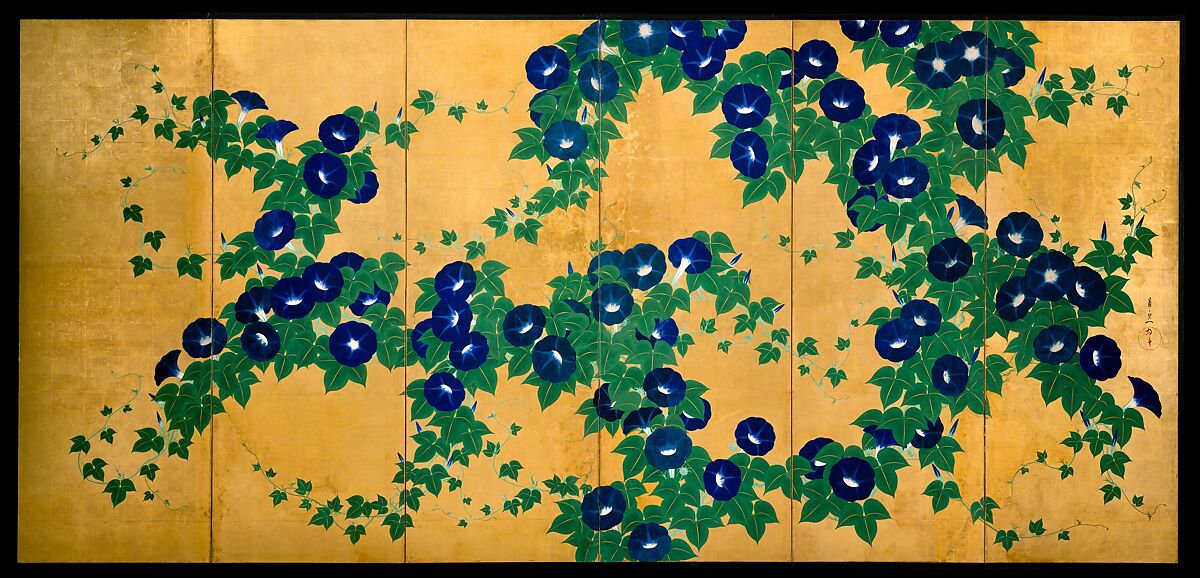
Suzuki Kiitsu, Morning Glories
c. 1850, Edo period. Ink, color, and gold leaf on paper, pair of six-panel folding screens.
Each 178.3 × 379.7 cm. The Metropolitan Museum of Art, New York.
鈴木其一《朝顔図屏風》
1850年頃、江戸時代。紙本金地着色、六曲一双。各178.3 × 379.7 cm。The Metropolitan Museum of Art, New York 蔵。
Suzuki Kiitsu, Mountain Streams in Summer and Autumn
19th century, Edo period. Ink and color on gold-foiled paper, pair of six-panel folding screens.
Each 165.8 × 363.2 cm. Important Cultural Property, Nezu Museum, Tokyo.
鈴木其一《夏秋渓流図屏風》
19世紀、江戸時代。紙本金地着色、六曲一双。各165.8 × 363.2 cm。重要文化財、根津美術館蔵。
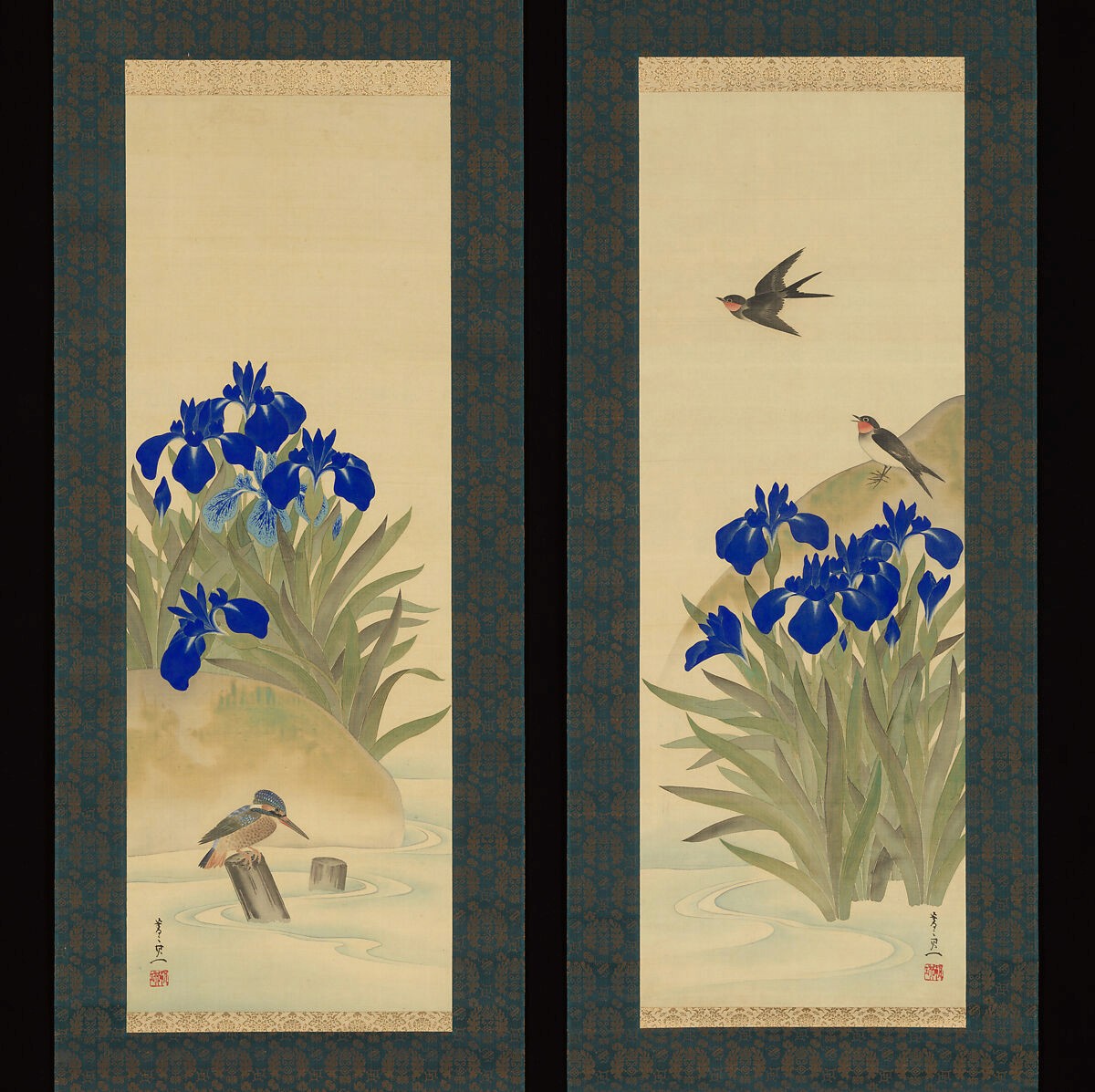
Suzuki Kiitsu, Irises
Mid-1850s, Edo period. Ink and color on silk, diptych of hanging scrolls. Each 93.3 × 32.8 cm.
The Metropolitan Museum of Art, New York.
鈴木其一《燕子花図》
1850年代半ば、江戸時代。絹本着色、掛幅二幅。各93.3 × 32.8 cm。
The Metropolitan Museum of Art, New York 蔵。
19 CENTURY RIMPA ACROSSES THE SEA
In the second half of the nineteenth century, Japanese art crossed into Europe and gave rise to the broad cultural phenomenon known as Japonisme. Flatness, asymmetrical composition, bold fields of color, strong outlines, repetition, and decorative rhythm introduced a new visual language into Western modern art, from Impressionism to Post-Impressionism.
Within this wider movement of Japanese art across borders, RIMPA21 MUSEUM recognizes aesthetic resonances that echo the spirit of Rinpa.
1. The Metropolitan Museum of Art — Japonisme
“Japanese woodcuts … transformed Impressionist and Post-Impressionist art.”
日本の木版画は、印象派およびポスト印象派の芸術を変容させた。
2. Fondation Claude Monet — Monet & Tadamasa Hayashi
“merchant Tadamasa Hayashi, with whom he exchanged two paintings for prints by Utamaro and Eishi”
美術商・林忠正とは、モネ自身の絵画2点を、歌麿と栄之の版画と交換した。
3. Van Gogh Museum, Amsterdam — Van Gogh & Japanese Prints
“Van Gogh drew great inspiration from the hundreds of Japanese woodblock prints that he collected together with his brother Theo.
He was deeply attracted to their planes of colour, patterns, cropping, and outlines, and began incorporating these features into his own work.
The Van Gogh Museum describes this process as an important part of the development of his Japonist works. ”
ゴッホは、弟テオとともに収集した数百点もの日本の木版画から、多大な着想を得ました。
彼は、日本の版画に見られる色面、パターン、クロッピング、輪郭線に強く惹かれ、これらの特徴を自らの作品に取り入れていきました。Van Gogh Museumは、この過程を、ゴッホがジャポニスムの作品を生み出していった重要な要素として説明しています。
VINCENT VAN GOGH 1796–1858
フィンセント・ファン・ゴッホ
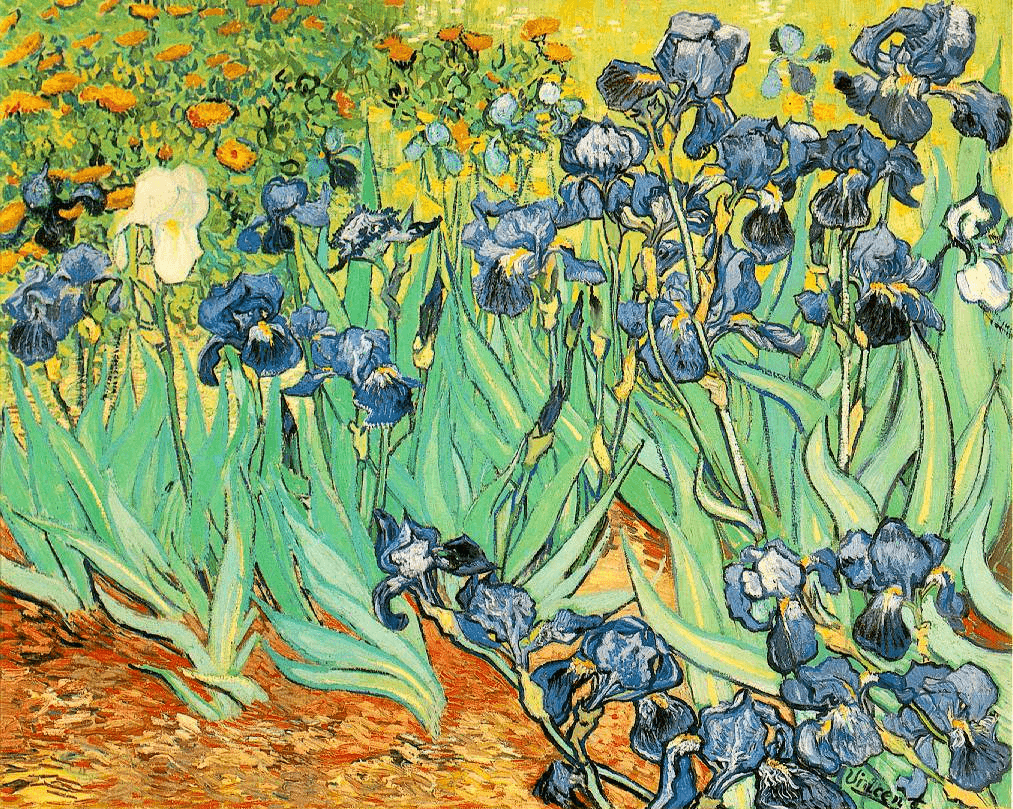
Vincent van Gogh, Irises
1889, Saint-Rémy-de-Provence. Oil on canvas. 74.3 × 94.3 cm.
The J. Paul Getty Museum, Los Angeles.
フィンセント・ファン・ゴッホ《アイリス》
1889年、サン=レミ=ド=プロヴァンス。油彩、カンヴァス。74.3 × 94.3 cm。
J. Paul Getty Museum, Los Angeles 蔵。
Van Gogh’s Irises reveals a clear dialogue with Japanese visual culture. The Getty notes that its cropped composition, broad fields of vivid color, and decorative patterning were probably influenced by Japanese woodblock prints.
EDGAR DEGAS 1834–1917
エドガー・ドガ
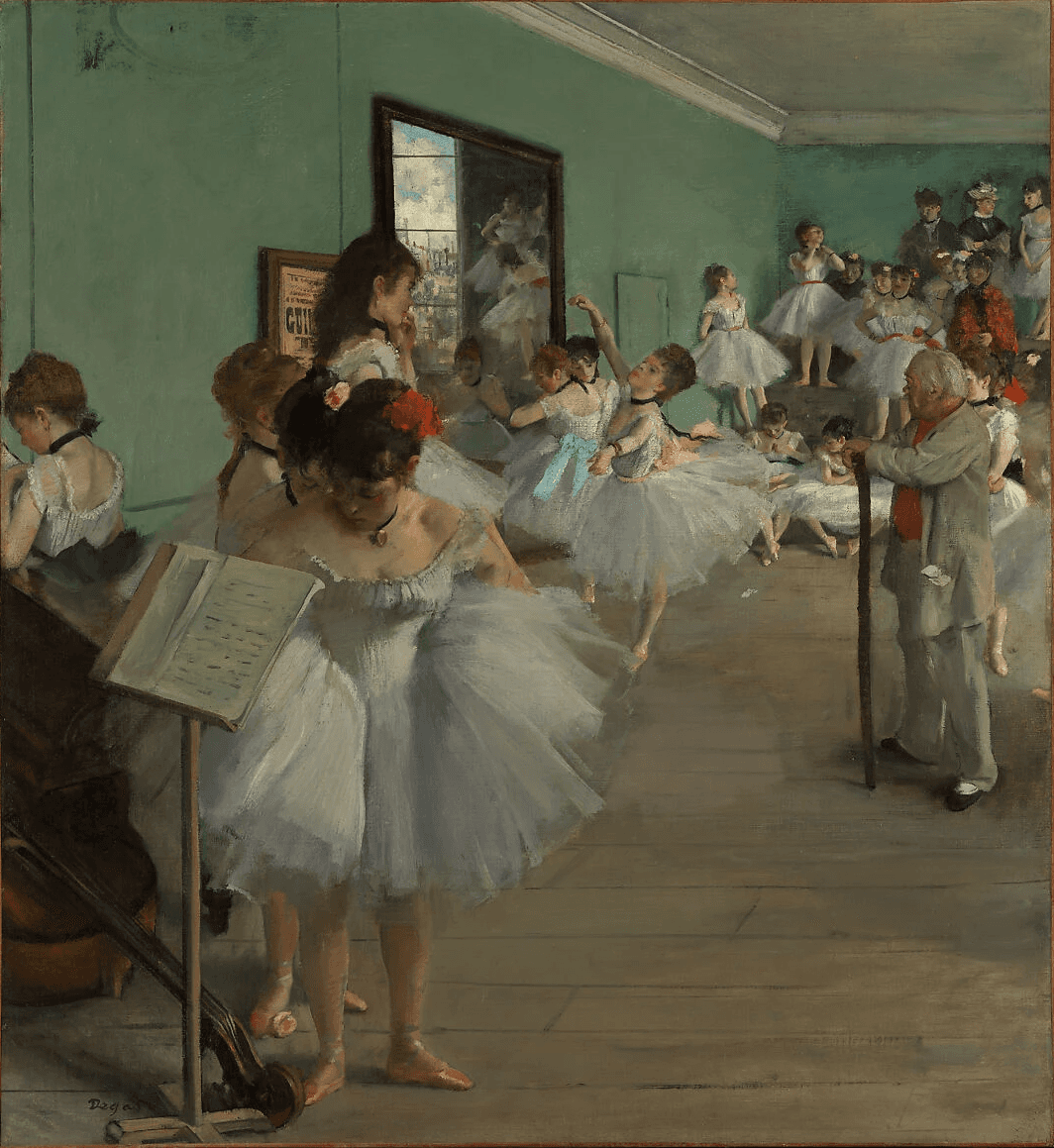
Edgar Degas, The Dance Class
1874. Oil on canvas. 83.5 × 77.2 cm.
The Metropolitan Museum of Art, New York.
エドガー・ドガ《ダンス教室》
1874年。油彩、カンヴァス。83.5 × 77.2 cm。
メトロポリタン美術館、ニューヨーク蔵。
MARY CASSATT 1844–1926
メアリー・カサット

Mary Cassatt, The Letter
1890–1891. Color drypoint, soft-ground etching, and aquatint on paper.
Plate: 36.6 × 22.6 cm.
National Gallery of Art, Washington, D.C.
メアリー・カサット《手紙》
1890–1891年。カラー・ドライポイント、ソフトグラウンド・エッチング、アクアチント、紙。
版面 36.6 × 22.6 cm。
ナショナル・ギャラリー、ワシントンD.C.蔵。
MARY CASSATT AND JAPANESE PRINTS
Mary Cassatt developed a profound engagement with Japanese prints, especially those of Hiroshige, Hokusai, and Utamaro. The National Gallery of Art notes that she combined this deep interest in Japanese art with her own artistic training and European influences.
After seeing a major exhibition of more than 700 Japanese woodblock prints at the École des Beaux-Arts in Paris in 1890, Cassatt created a celebrated series of ten color prints directly inspired by ukiyo-e. The Metropolitan Museum of Art states that she deliberately modeled these works on Japanese prints, adopting their flat forms, strong lines, and unmodulated color.
メアリー・カサットと日本版画
メアリー・カサットは、日本版画、とりわけ広重、北斎、歌麿の作品を深く研究しました。National Gallery of Artは、彼女が日本版画への深い関心を、自らの美術教育やヨーロッパ絵画の伝統と結びつけていたと説明しています。
1890年、パリのエコール・デ・ボザールで700点を超える日本の木版画展を見た後、カサットは浮世絵に直接触発された10点のカラー版画シリーズを制作しました。The Metropolitan Museum of Artは、彼女が日本版画を意識的な手本とし、その平面的な形態、力強い輪郭線、均質な色面を自作へ取り入れたと説明しています。
20 century
GUSTAV KLIMT 1862–1918
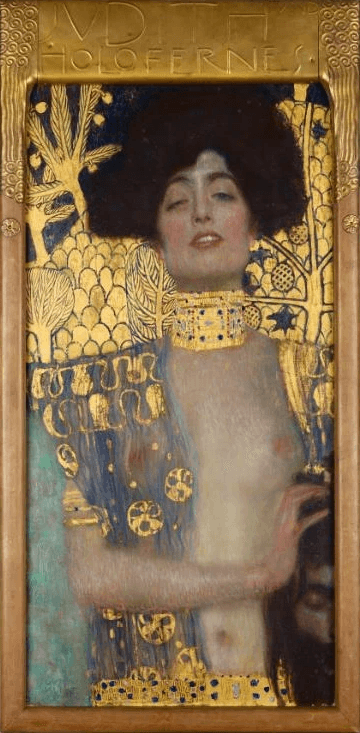
Gustav Klimt, Judith I
1901. Oil and gold leaf on canvas. 84 × 42 cm. Belvedere, Vienna.
グスタフ・クリムト《ユディト I》
1901年。油彩・金箔、カンヴァス。84 × 42 cm。ベルヴェデーレ美術館、ウィーン蔵。
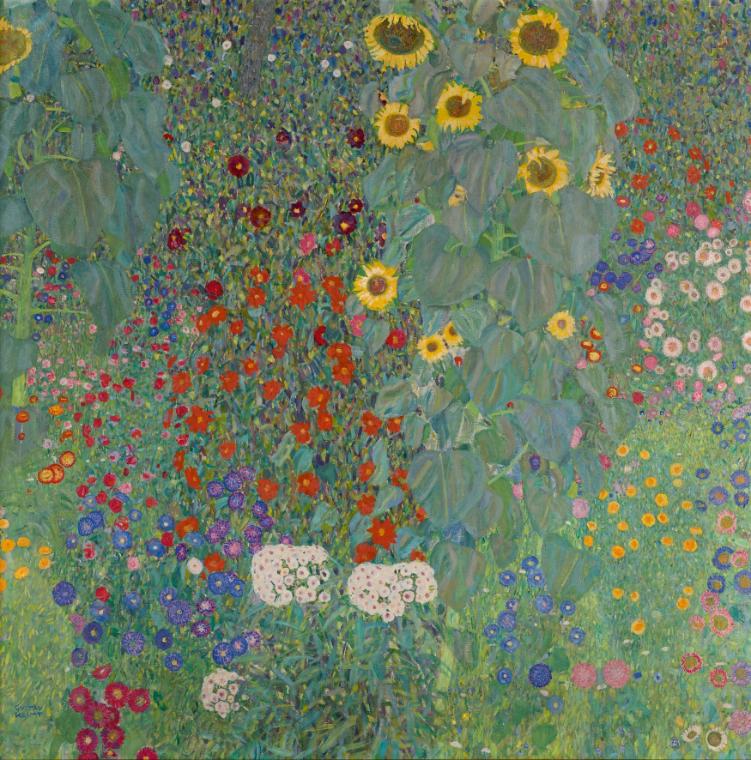
Gustav Klimt, Cottage Garden with Sunflowers
1906. Oil on canvas. 110 × 110 cm. Belvedere, Vienna.
グスタフ・クリムト《ひまわりのある農家の庭》
1906年。油彩、カンヴァス。110 × 110 cm。ベルヴェデーレ美術館、ウィーン蔵。

Gustav Klimt, The Kiss (Lovers)
c. 1907–1909. Gold leaf, silver leaf, platinum leaf, oil-based colors and other media on canvas.
180 × 180 cm. Belvedere, Vienna.
グスタフ・クリムト《接吻(恋人たち)》
1907–1909年頃。金箔・銀箔・プラチナ箔・油彩等、カンヴァス。180 × 180 cm。ベルヴェデーレ美術館、ウィーン蔵。
HENRI MATISSE 1869–1954

Henri Matisse, Dance (I)
1909. Oil on canvas. 260.4 × 390.4 cm.
The Museum of Modern Art, New York
アンリ・マティス《ダンス I》
1909年。油彩、カンヴァス。260.4 × 390.4 cm。
The Museum of Modern Art, New York 蔵。
ANDY WARHOL 1928–1987
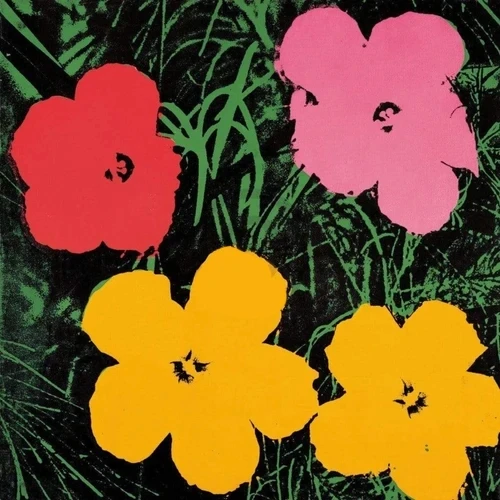
Andy Warhol, Flowers
1964. Acrylic and silkscreen ink on canvas.
61.3 × 61 cm.
The Metropolitan Museum of Art, New York.
アンディ・ウォーホル《Flowers》
1964年。アクリル、シルクスクリーン・インク、カンヴァス。
61.3 × 61 cm。
メトロポリタン美術館、ニューヨーク蔵。